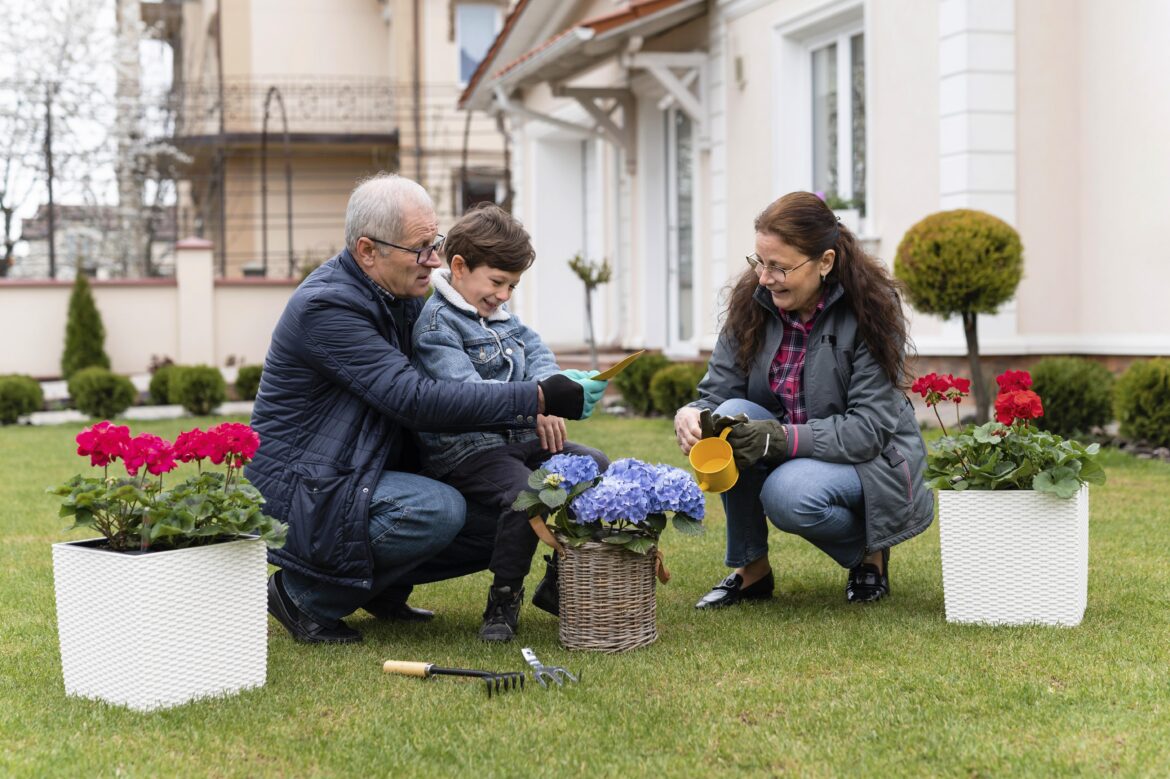
If you tell your kids you are spending the weekend planting a garden, you might get some mild enthusiasm. Seeds, watering cans, and watching tomatoes grow are an easy sell. But if you announce that you are spending Saturday digging a trench for a retaining wall or leveling a base for a new fire pit, your kids will likely vanish into the house to find the nearest iPad. Hardscaping sounds like exactly what it is: hard, heavy labor.
It is also inherently adult work. You are dealing with heavy stones, power tools, and precise measurements. But keeping your kids entirely separated from the process is a missed opportunity. Building a patio or a stone walkway gives them a rare chance to see how something permanent is built from the ground up.
Before you back the truck down the driveway and start unloading your hardscaping supplies, you need a game plan. You can’t just hand a seven-year-old a 40-pound retaining wall block and hope for the best. You have to carve out specific, age-appropriate jobs that make them feel essential without putting them in harm’s way.
Here is how to get your kids off the couch, into the dirt, and actively engaged in your next backyard build.
1. Give Them the Site Inspector Title
Kids love authority, and they love a clipboard. Before a single shovel hits the dirt, involve them in the planning and layout phase. When you are mapping out where the new walkway or patio will go, hand them the marking paint (if they are old enough to use it safely) or a bundle of marking flags. Have them walk the perimeter with you. Let them hold the end of the tape measure.
Ask them questions about the layout. “Do you think the fire pit should go closer to the tree, or closer to the deck?” Even if you already know exactly where it is going, asking for their input gives them a sense of ownership over the project. They aren’t just watching you build a patio; they are helping you design it.
2. The Child-Sized Wheelbarrow Fleet
Kids desperately want to do “real” work. If you give a kid a plastic toy shovel while you are using a real steel spade, they know they are being patronized. They will lose interest in ten minutes. If you want them engaged, get them real, child-sized tools. A small metal wheelbarrow and a sturdy youth shovel are worth their weight in gold.
Hardscaping requires moving a massive amount of aggregate—crushed gravel, sand, and river rock. While you are moving the heavy loads, assign them a specific pile that is theirs to move. Tell them you need exactly three small wheelbarrow loads of paver sand dumped in a specific corner. It burns off their endless energy, it gets them incredibly dirty (which they love), and it genuinely helps move the project along, even if it is just a few pounds at a time.
3. The Level Boss
Building a solid hardscape is an exercise in extreme patience and precision. Everything has to be perfectly level, properly sloped, and tightly packed. This is the perfect opportunity for a stealth math and physics lesson. Teach your kids how to read a bubble level. Explain why the bubble needs to be exactly between the two black lines, and explain what happens to the patio furniture if it isn’t.
Make them the official “level boss.” Every time you drop a base paver or a wall block into place, step back and have them put the level on it. Wait for their official ruling. If it’s high on one side, hand them a rubber mallet and let them tap it down. It slows your personal workflow down by a few seconds per block, but the pride they feel when they successfully level a heavy stone is incredible to watch.
4. The Joint Sand Sweeper
If you are laying a paver patio or a brick walkway, the final step is usually sweeping polymeric sand into the joints.
For a kid, this is basically playing in a giant sandbox, but with permission to make a mess. Hand them a push broom and tell them their job is to push the sand into every single crack until it disappears. It is a highly satisfying, low-risk job. There are no heavy lifting hazards, no sharp tools, and it is almost impossible for them to mess it up.
When it is time to lightly mist the patio with the hose to lock the sand in place, hand over the nozzle. There is not a kid on the planet who will turn down an excuse to spray the hose.
5. Setting Boundaries
Part of teaching kids how to work is teaching them how to be safe on a job site. You need to be incredibly clear about the no-go zones before the weekend starts. If you are renting a plate compactor to tamp down your gravel base, that is a hard boundary. If you are running a wet saw to cut edge pavers, they need to be sitting ten feet away on the grass.
Explain why these tools are dangerous. Don’t just yell “Stay back!” Tell them, “This saw cuts through solid rock, which means it doesn’t care about fingers. You have to stand behind the cooler while it is running.” Treating them with respect and giving them the why behind the safety rules makes them far more likely to listen.
A Realistic Approach
Let’s be realistic: your kids are not going to work a full eight-hour shift with you. They will work hard for forty-five minutes, get distracted by a cool bug they found in the dirt, and then wander off to go ride their bikes. That is completely fine. The goal isn’t to secure free labor for your weekend project. The goal is to show them the value of sweat equity.
When the project is finally finished, they will look down at the stones and know that they helped put them there. They learn that a house isn’t just a place you live in; it’s a place you actively build and care for. And that is a lesson that outlasts any patio.