There is a specific look of horror that washes over a teenager’s face when you suggest waking up before noon on a Saturday to do manual labor.
They finally have their license. They have the freedom. They have the keys. But they usually lack the fundamental understanding that a car is a giant, expensive machine that is slowly destroying itself every time they turn the ignition. To them, the car is an appliance—you put gas in, you press the pedal, and it goes.
Teaching your teenager how to change their own oil is about more than just fluid mechanics. It is a lesson in ownership. It breaks the cycle of “learned helplessness” where they rely on a mechanic for every rattle and hum. It saves them a fortune over their lifetime, and, perhaps most importantly, it forces them to put their phone down and get their hands dirty for forty-five minutes.
Before you drag them out to the driveway, you need a game plan. You need the right tools, the right attitude, and the right supplies, like a high-quality synthetic motor oil that will keep their engine running even when they inevitably forget the next scheduled change.
Here is how to turn a messy chore into a masterclass in adulthood without losing your patience.
1. The Wallet Argument
If you start by talking about viscosity and lubrication, their eyes will glaze over. You have to speak their language: money.
Sit them down and show them the receipt from a quick-lube shop. It’s usually eighty or ninety dollars for a full synthetic change. Then, show them the receipt for five quarts of oil and a filter from the auto parts store. It’s usually half that. Do the math for them. “If you do this yourself three times a year, you save $150. That is three tanks of gas. That is two concert tickets. That is yours to keep if you do the work.” Suddenly, they are listening. You aren’t asking them to do chores; you are showing them a life hack to keep more money in their pocket.
2. Safety First
This is the only part of the lesson where you need to be a drill sergeant. Teenagers feel invincible. They will try to crawl under a car supported only by a hydraulic jack because it’s “faster.”
The Rule: No one goes under the metal until the car is on jack stands and the wheels are chocked. Explain the physics. A hydraulic jack is a mechanical device that can fail. A jack stand is a solid piece of steel that cannot. Show them where the frame rails are. Make them shake the car violently before they slide under it. If the car moves, you don’t go under. This isn’t just about oil; it’s about respecting heavy machinery.
3. The Righty-Tighty Struggle
The drain plug is the first physical hurdle. Ideally, the engine should be slightly warm (so the oil flows), which means the exhaust pipe is hot. This is a sensory lesson. They have to learn how to position their body so they have leverage to break the bolt loose without burning their forearm on the catalytic converter.
The “Glug” Moment: Warn them about the trajectory. Newbies always place the drain pan directly under the plug. They forget that when the plug comes out, the oil shoots out horizontally for the first few seconds before trickling down. Let them make a small mess (it’s how they learn), but have the rags ready. Watching the black, sludge-like oil pour out is actually satisfying—it’s visual proof that the engine needed help.
4. The Filter and the Double Gasket Disaster
Removing the old filter is usually a wrestling match. If it was put on extremely tightly last time, your teen might need a filter wrench. Let them struggle with it for a minute; it builds character.
Crucial Lesson: Once the old filter is off, make them check the mounting surface. Did the old rubber gasket come off with the filter? Or is it stuck to the engine block? If they screw the new filter on top of the old gasket, oil will spray everywhere the moment they start the car. It is a catastrophic, engine-destroying mistake. Show them how to dip their finger in the new oil and lubricate the rim of the new filter. Explain that this prevents the gasket from bunching up and makes it easier to remove next time.
5. The Pour and the Check
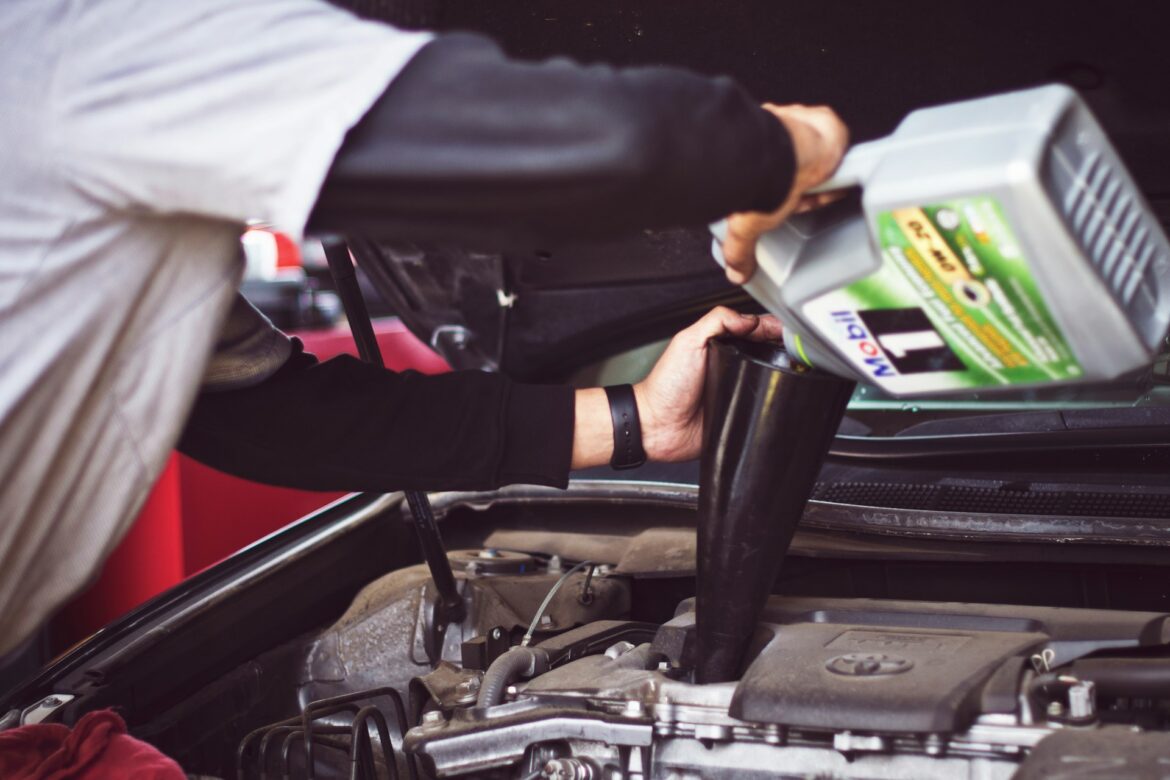
Pouring the new oil is where patience is required. Hand them the funnel. Tell them to pour slowly. If they dump the bottle upside down, it will “glug” and splash over the valve cover. If they pour with the spout at the top (sideways), it flows smoothly.
The Dipstick Art: Checking the oil isn’t just looking for wetness. It’s about precision.
- Pull it out.
- Wipe it clean.
- Put it back in.
- Pull it out again.
- Now read it. Show them the hash marks. Explain that “close enough” isn’t good enough. If it’s low, the engine grinds. If it’s overfilled, the oil foams and loses pressure.
6. The Job Isn’t Done Yet
The job isn’t over when the hood is closed. Teens are famous for leaving tools in the driveway. Make them wipe down the wrenches. Make them pour the old oil into the empty jug (using the funnel). Explain that pouring oil down the storm drain is illegal and terrible for the environment. Take them with you to the auto parts store to recycle them. It shows them that being a car owner means being responsible for the waste they create.
Teaching a Skill
The first time you do this, it will take an hour. There will be complaining and oil on their forehead. But the next time the “Maintenance Required” light pops up on their dashboard, they won’t panic. They won’t wonder how they are going to afford a mechanic. They will just drive to the store, buy their supplies, and handle it. That confidence is the real product. The clean engine is just a bonus.